Is Nh3 A Polar Covalent Bond. According to three dimensional structure, the molecule has a pyramid. 2 days ago · nh3 is a polar molecule because, in the nh3 molecule, it has three dipoles because of three bonds and these dipoles do not cancel out each other.
Polar Bond from studylib.net
Why is bh3 nonpolar but nh3 is polar? Nitrogen forms a covalent bond with three atoms to form a molecule. Due to the repulsive forces of the.
Ionization Energy Electronegativity And Lattice Energy Are The Factors That Influence The Formation Of Ionic Bonds Of.
Yes, we can say that nh3 is a polar covalent bond. Polar and nonpolar covalent bonds: Hence, boron trifluoride (bf3) has a trigonal planar structure, therefore the dipole moments of each b−f bond cancel each other.
The Polarity Comes From The Unequal Distribution Of Charges Among Both Nitrogen And Hydrogen Atoms.
Click here👆to get an answer to your question ️ identify this bond: Ammonia with a chemical formula of nh3 is a polar molecule because the nh3 molecule possesses three dipoles that do not cancel each other. Although the electron pairs are arranged tetrahedrally only 3 valence electrons are bonding electrons which form 3 covalent bonds with hydrogen atoms.
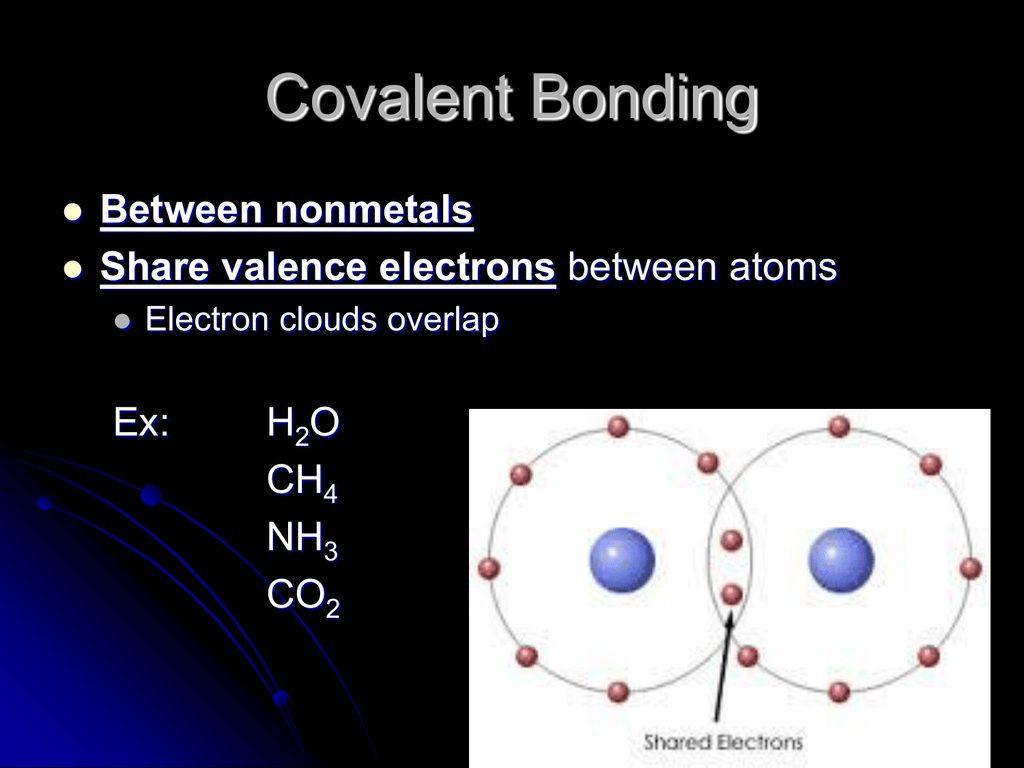
A Covalent Bond Means The N And H Atoms Share Valence Electrons While Creating An Electric Dipole (Opposite Charges With Standard Distance).
Use theory to determine the shape of nh3. (electronegativity is the relative “desire” of one atom with respect to another atom for electrons in a bond.) the molecule is polar, also, because nh3 is pyramidal in shape with nitrogen at top of the pyramid. The sharing of electrons between atoms of different elements (for example h2o, ch4 and nh3 etc).
As Ammonia Nh3 Formed From Two Nonmetallic Atoms So The Bond Which Join The Atoms Is Covalent.
For bcl3, with 3 valence electrons in group 3, and that boron is an exception with not filling its octet (8 valence electrons). The electron pair geometry is tetrahedral but the molecular shape is trigonal pyramidal. But due to electronegativity difference between n and h, the shared pair of electrons are attracted by n atom, making the bond polar.
The Other 2 Are A Lone Pair Which Is Closer To The Nitrogen Atom Of The Molecule.
In nh3 there is a lone pair present on nitrogen atom and nitrogen is more electronegative than hydrogen that causes electron movement in only one direction and the dipole moment is not 0 so it’s a polar compound. They form a net dipole moment. Hence there is a net dipole moment in the molecule, making ammonia a polar molecule.